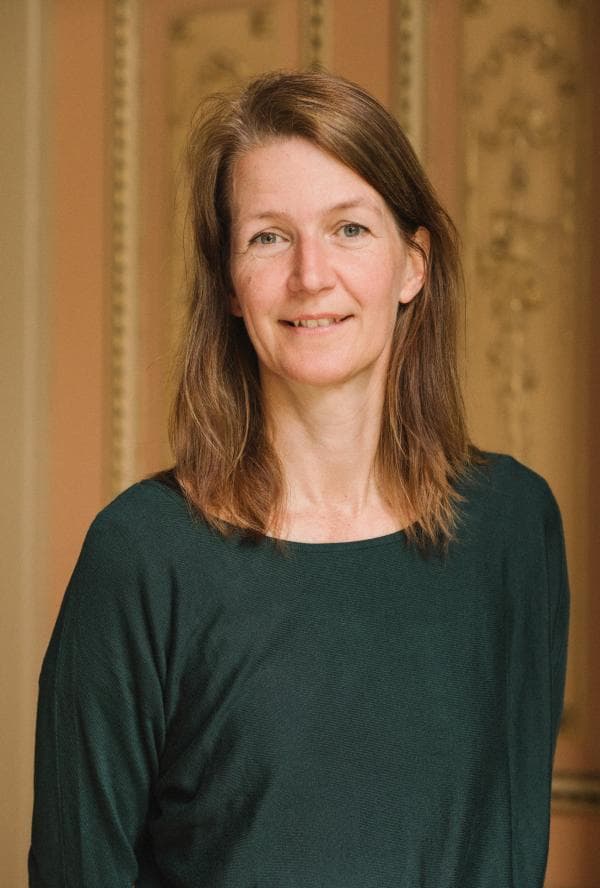
Katie Digan
Communications Advisor
Today, 1 April 2021, marks the tenth anniversary of the NIOD blog. For a decade, the blog has offered a glimpse behind the scenes at NIOD, and has provided a platform for NIOD staff to write about their work in an accessible way, and to share their expertise with the public and colleagues. Marjo Bakker, founder and editor of the NIOD blog, discusses how the blog has flourished from being a personal blog into an institute-wide undertaking.
1 April 2021
·
by Marjo Bakker
·
7 minutes
‘From solo act to group show’; it’s a bit of a cheesy sub-title, I admit. But that’s how it went, and the phrase has a nice ring to it. On the tenth anniversary of the NIOD blog – today, 1 April 2021 – I would like to take stock and ask: why did we start blogging in the first place, what has it brought us, and where do we go next?
In 2009, when I was working at the National Archives of the Netherlands (NA), I took a course (mandatory for all employees) in ‘23 Archiefdingen’. An introduction to the Web 2.0 and social media, it was a very popular course in the heritage sector. You had to keep track of your progress on your own blog. A whole world opened up for me. Blogging turned out to be great, because you could express yourself – even thought it was very scary at first – without an editor or lead times getting in the way. You could promote your library collection, and you could also gain new knowledge and make new acquaintances. And I took that with me to NIOD.
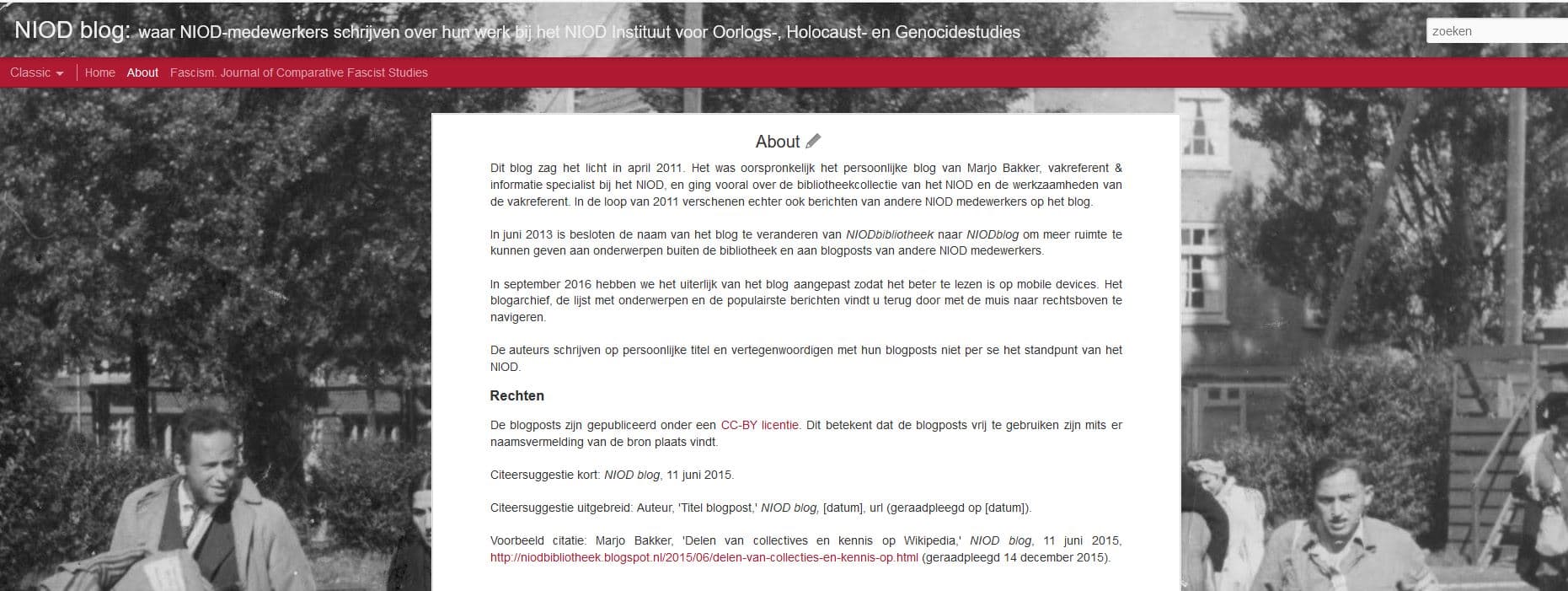
The first ‘About’ text of what was then still the NIOD library blog read: ‘This weblog exists for several reasons. I would like to inform NIOD’s visitors about the library collection. That also applies to NIOD’s staff: I want to show them what I actually do in this wonderful room on the second floor. I’d like to give my colleagues in libraries and archives a glimpse behind the scenes at NIOD. And I want to show the future librarians/collections specialists/information specialists who are currently still studying what a fantastic profession we have. Finally, I am using this blog as my external memory, to register and develop ideas and meetings.’ Looking back, I think the mention of future colleagues is particularly nice.
In order to draw attention to the library’s collection, I posted messages about library acquisitions. As I also wanted to offer a behind-the-scenes glimpse of this special institute where so many fantastic things were taking place (and still do), I played the role of ‘roving reporter’ at the monthly lunchtime lectures and other substantive meetings at the institute.
I also felt a great need to show the outside world what the library profession involves, so I reported on my working week, the collections specialists meeting, the archival librarians’ meeting, Adamnet and the professional association, the KNVI.
Particularly in the beginning, several aspects of my work were quite new, including research data management and open access. To help organise my thoughts, I wrote blog posts about meetings in these fields. It’s nice to look back and re-read these blog posts.
The aims of blogging have gradually become broader, and this is related to the changing nature of the NIOD blog. Within six months, the first guest blog-spot appeared on what was then still the NIOD library blog. My colleague Edwin Klijn wrote a great piece on the ‘digital drama’ (which, I might add, still makes the top-ten of most-read NIOD blog posts). More guest authors followed, such as my colleagues Petra Links and David Barnouw. I also encouraged other colleagues to write blog posts.

This caught on; so much so, in fact, that in June 2013 we changed the name of the blog from NIOD Library to NIOD Blog. This created space for non-library topics and blog posts by other NIOD employees (including interns). Each blog post was accompanied by a portrait photo of the author and an introduction in italics, and a link was added to the NIOD website. The NIOD blog became more and more comprehensive, covering collections, services and research. At the same time, I myself blogged considerably less about the library collection. The last blog post about library acquisitions, for example, was published in November 2014.
For ten years, the NIOD blog has given an insight into what’s happening at NIOD and has provided NIOD employees with a platform for writing about their work in an accessible way, and sharing their expertise with the public and colleagues. A nice ‘result’ for the blog.
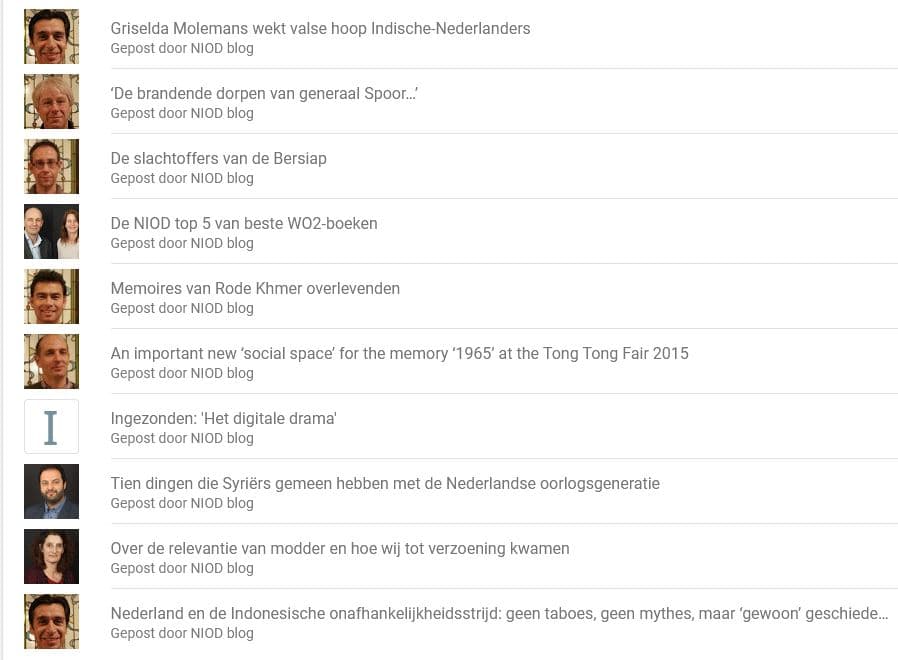
The mix of authors at NIOD resulted in a wonderful variety of topics. Indeed, the striking thing about the top-10 most-read blog posts (see figure) is that the Second World War is the main topic of only one (possibly two) blog posts. We’ve also published blog posts with intriguing and imaginative titles, such as:
Another great thing is that blog posts – via the entry in Pure and ORCID – count as ‘research output’ on scholars’ publication lists and in the annual figures of the institute.
A total of 190 blog posts have been published. In the period between 2011 and 2014, we posted around 30 a year. The rate then fell, reaching a low-point of just six blog posts in 2018. Since 2020, we have been publishing one blog post a month, so we’re continuing in modest fashion.
The relatively large number of unpublished blog posts is striking; some are just a few lines on an idea, others are almost a finished text. There are currently 50 ‘concepts’ that haven’t made it, either because there hasn’t been time or because the subject turned out to be less relevant or topical than thought. To name a few: 'Are you a Griffinite?'; 'E-humanities: what you don’t put in, you don’t get out'; 'What's the use of OA mega journals?'; 'Goodbye to Elly and to paper?'; 'Where an information professional should read “Burning the books”’ (this last one has a chance of being published, I should add).
So long as colleagues need an accessible publication platform and we are keen to show what’s happening at NIOD in a slightly more informal way than on the website, the NIOD blog’s existence will be justified. The glimpse behind the scenes and the platform are very valuable, in my opinion.
Perhaps we could make it a bit livelier – with more blog posts, more insights, more exchange. I’m struck by the fact that there are relatively few comments on the blog posts. Does this means that we just ‘send’, or does the interaction take place elsewhere? Or is ‘just sending’ not such a bad thing after all? Is the world simply not that interested in looking behind the scenes? Those are the kinds of things I would like to find out.
The NIOD blog will probably move to a new location in 2021, namely to the new NIOD website. Integration into the NIOD website was suggested back at the beginning, in 2011, but at that stage Blogger (where the blog is currently based) seemed the most convenient option.
Academic Blogging: For a growing number of researchers, blogging is an important part of their academic life. Why might you want to join the crowd?' LSE, accessed 1 April 2021.
Mareike König, 'Does Blogging Make You a Better Academic? Writing Practices in Scholarly Blogs in the Humanities,' Redaktionsblog, 9 juli 2020.
Communications Advisor
Stay up to date every month about new publications, activities and more.
Herengracht 380
1016 CJ Amsterdam
Tue - Fri: 09:00 - 17:30 hour
Closed on Monday
Note:
The NIOD itself is open as usual on Monday.
The NIOD is an institute of the Royal Netherlands Academy of Arts and Sciences