Missing links, colonial fossils
On the political and cultural value of the ‘Dubois collection’
The ‘Dubois collection’, a collection of fossils excavated in the former Netherlands East Indies by Dutch physician Eugène Dubois in the 19th century, and brought back to the Netherlands, is being returned to Indonesia. What makes this collection so interesting from a political and scientific perspective, and why was the decision made in 2025 to return the fossils?
22 April 2026
·
Longread
·
15 minutes
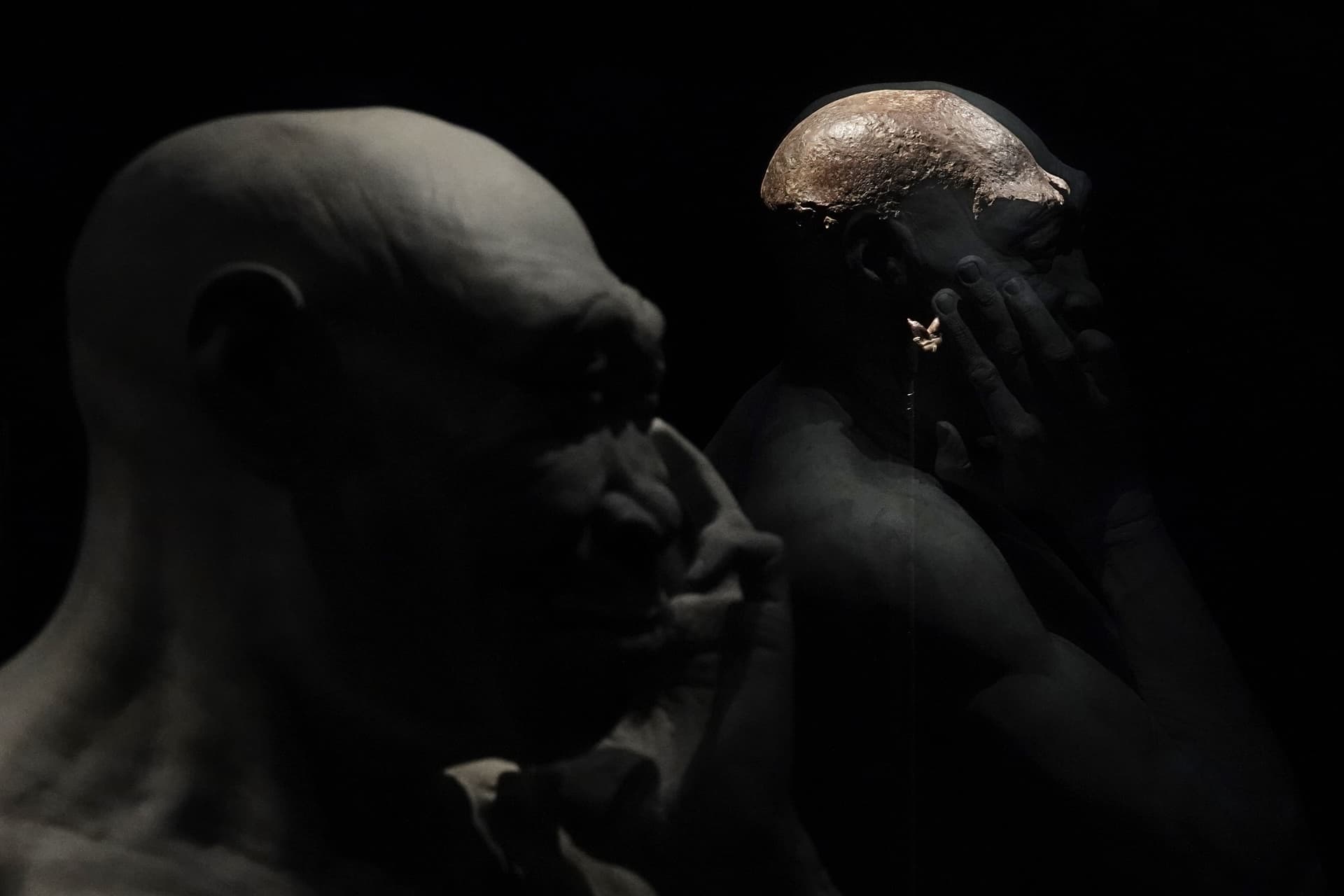
geprojecteerd op een hedendaags model van deze uitgestorven mensensoort.
Naturalis Bioportal
In 1951, Muhammad Yamin, the Indonesian intellectual and later minister of Justice and Culture, declared that the Netherlands should return the Pithecanthropus erectus fossils to the Republic of Indonesia. These important fossils had been excavated on Java in the late nineteenth century under the supervision of Dutch physician Eugène Dubois, but, according to Yamin, the Republic of Indonesia was their ‘rightful owner’, and these ‘Indonesian cultural objects’, as he called the fossils, were 'of inestimable value to Indonesia and to prehistoric and anthropological science’.
Yamin’s call sparked a decades-long debate about the ownership of the collection of tens of thousands of fossils and palaeontological remains, which were kept in what was then the Leiden National Museum of Natural History. In particular, the fossils of an extinct protohuman – a skull, a thigh bone and a molar, described by Dubois as the missing link in the story of human evolution – had become famous around the world since their excavation.
In 1975, the Netherlands and Indonesia agreed that the question of the ownership of the Dubois collection should be investigated further, but only today has Muhammad Yamin’s wish been fulfilled: on 26 September 2025, the outgoing Minister of Education, Culture and Science, Gouke Moes, decided that the Netherlands would unconditionally return the entire Dubois collection, including the accompanying documentation, to the Republic of Indonesia.
The collection had been a source of controversy ever since the fossils were excavated: at first regarding the scientific value of Dubois’ finds, and later concerning the question of the collection’s rightful owner. In 2022, a new policy on the return of so-called ‘colonial collections’ was established in the Netherlands, and Indonesia renewed its claim to the Dubois collection.
Immediately after Indonesia’s official request for the restitution of the fossil collection, a discussion ensued in the Netherlands about its possible return; for is a natural history collection, assembled for scientific purposes, eligible for return under a policy that focuses primarily on the restitution of cultural objects?
Research carried out by staff at NIOD’s Expert Centre Restitution has shown that the collection of fossils that was excavated under Dubois’ supervision has always had political-cultural as well as scientific value; and that is what we explore in this long read. Why has this collection been a subject of interest to both scientists and politicians for so long?
Provenance research on colonial objects
The provenance research on the Dubois collection that was carried out by researchers from NIOD’s Expert Centre Restitution was different from the usual investigation in response to a restitution request. As a rule, the research focuses on the moment the object came into Dutch colonial hands. The research on the Dubois collection covered a much broader history spanning more than 150 years. Not only was the excavation of the fossils between 1890 and 1900 a key moment, but also the scientific context in the Netherlands East Indies at the time, official agreements on the ownership of the collection from the first half of the twentieth century, and later political interest in the Dubois collection from an independent Indonesia.
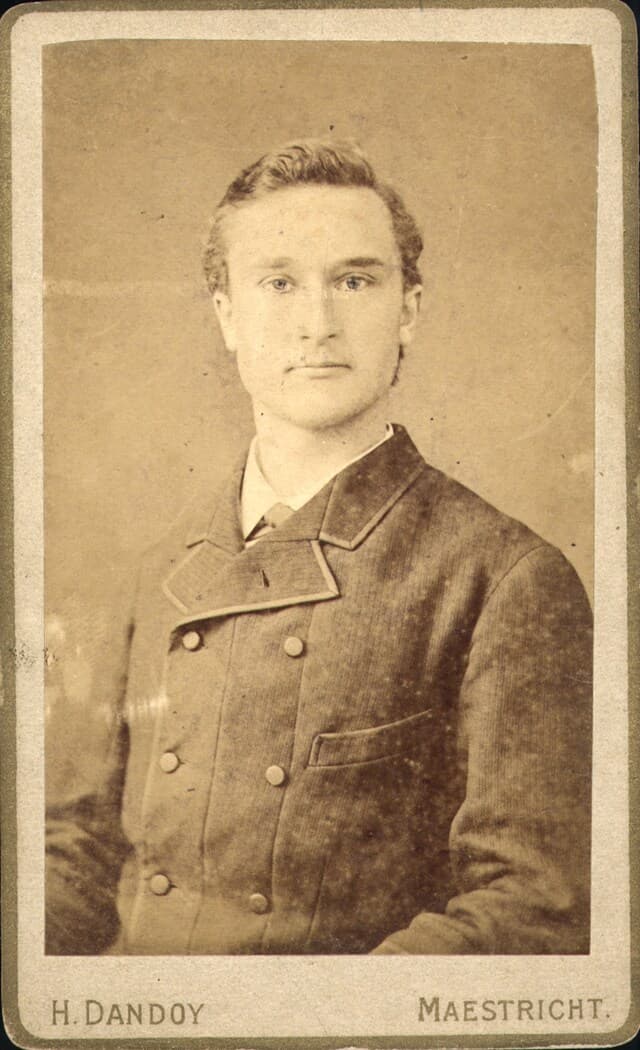
Bron: Naturalis Biodiversity Center.

The excavations
In 1887, Eugène Dubois, his wife and daughter left for what was then the Netherlands East Indies. He had enlisted as an army doctor with the East Indies colonial army (KNIL), as a means to pursue his real goal: finding the missing link in the evolution from ape to human. Dubois, who had grown up in an age when Darwin’s theory of evolution was gaining traction, wanted to try his luck in the South-east Asian archipelago. The fact that Indonesia was under Dutch colonial rule and thus relatively accessible for Dubois was naturally a factor in his decision to carry out his research in this region.
On 6 March 1889, Dubois received permission from the governor-general of the Netherlands Indies to undertake ‘palaeontological research in caves in the government of Sumatra’s West Coast and possibly on Java’, on the explicit condition that the fossils obtained would be made available to the colonial government of the East Indies.
Dubois did not himself carry out the heavy work of the excavations in the scorching heat; in the photo below, for example, you can see that large sections of the bank of the Solo River on Java were dug up. A message from the governor-general instructed the administrator of Sumatra’s West Coast to ‘provide as many forced labourers as requested by Mr M.E.F.T. Dubois.’
On Java, where he soon sought refuge after the excavations on Sumatra failed to yield the desired results, Dubois likewise had fifty forced labourers at his disposal. Dubois himself visited the excavations only occasionally. During his work on Java, he spent much of his time at a bungalow near Tulungagung, more than 150 kilometres away from Trinil, where the excavations were taking place.
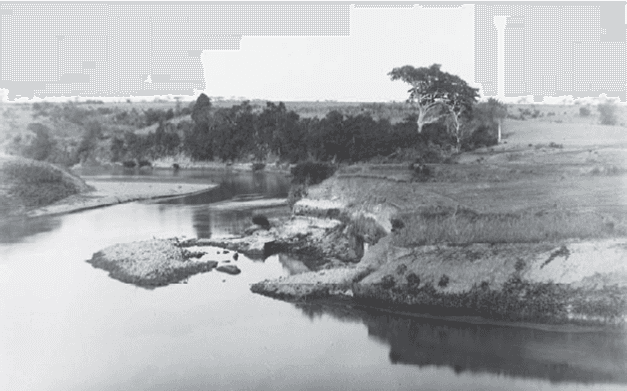
Paul C.H. Albers en John de Vos, Through Eugène Dubois’ eyes. Stills of a turbulent life (Leiden: Brill 2010), 75
The fossils that were dug up from the bed of the Solo River by the forced labourers, overseen by two engineers from the KNIL, were sent to Dubois’ bungalow in crates. He displayed the large quantities of fossilised remains of all kinds of flora and fauna on his veranda. One remarkable fossil – initially thought to be the shell of a turtle or part of an elephant bone – turned out, after Dubois had removed the petrified earth from the inside of the fossil, to be the missing link that he had been hoping to find all along: the skull of an extinct human species. He named the species he had discovered, somewhere between a human and an ape, Pithecanthropus erectus (‘upright ape-man’). Later, after Dubois had died, the name was changed to Homo erectus, the term still commonly used for this extinct protohuman.
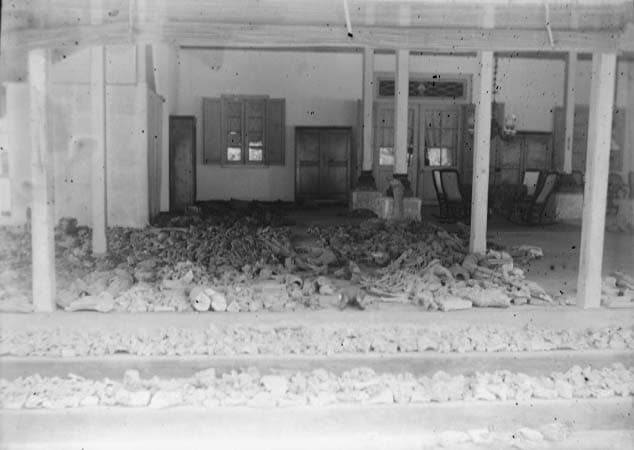
Paul C.H. Albers en John de Vos, Through Eugène Dubois’ eyes. Stills of a turbulent life (Leiden: Brill 2010), 75
In 1894, Dubois requested permission to send the collection of fossils to the Netherlands, where he believed they could be better studied and compared to other material. The governor-general of the Netherlands East Indies agreed, but made it clear, according to Dubois’ boss, that the transfer was not intended as ‘a simple gift to the [Leiden] museum, they are being sent there to be worked on further by Mr Dubois’ – although some confusion later arose on this point. The collection ended up at the then National Museum of National History, the predecessor of today’s Naturalis Biodiversity Center.
In the first few years after his return, little came of Dubois’ further research. He spent a lot of time visiting various congresses to present his new discovery to the public. Although some scientists supported Dubois’ ideas about human evolution, he also drew considerable criticism. In the end, this caused Dubois to withdraw and to keep the Homo erectus fossils mainly to himself. When he was made a professor at the University of Amsterdam in 1897, Dubois still hadn’t started to describe the collection. Only after much urging from various scientists and organisations was an assistant appointed to help him with his research.

The emergence of an ‘Indies voice’
With his excavations, Dubois became part of a rapidly developing scientific tradition in the Indonesian archipelago, of collecting and categorising biological specimens, geological samples, cultural artefacts and antiquities. Scientists and collectors from various disciplines and from different European countries vied to map out ‘undiscovered’ cultures and ‘unexplored’ nature.
Indigenous knowledge and the local connotations of flora, fauna and cultural customs were fundamentally undervalued compared to ‘scientific’ Western knowledge. Yet scientists, including Dubois, did use local informants to locate sites where treasures could be found. As a result, areas colonised by Europeans became colonies not only in an economic sense, but also culturally, scientifically, and in terms of their natural history.
In order to stimulate these scientific expeditions, but also to get ahead of the competition from scientists from other European countries, various scientific and cultural associations were founded in the Netherlands East Indies, the most famous being the Batavian Society of Arts and Sciences (Bataviaasch Genootschap van Kunsten en Wetenschappen). As more and more Europeans settled in the archipelago for longer periods of time, it was these associations that began to argue that natural and cultural heritage should not automatically be sent to Europe, but that it should be kept by and exhibited in the colony.
This could be seen as the beginning of an increasingly articulate ‘Indies voice’: a pro-Indies movement of commentators, politicians and scholars who emphasised the interests of the colony in relation to the European metropole, and who would continue to play a role in Indonesia’s new cultural politics in the postcolonial period. Science and national prestige thus went hand in hand.
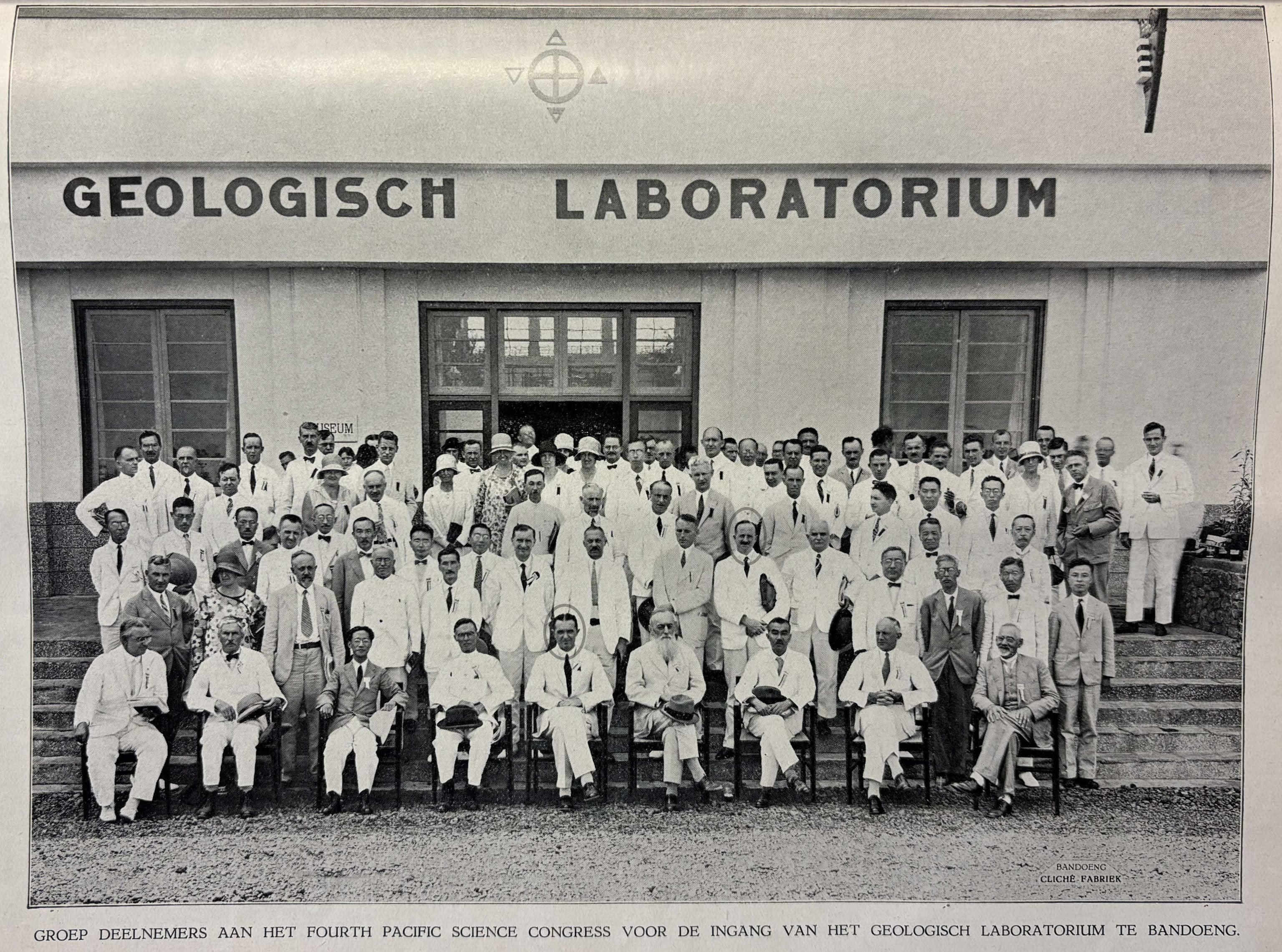
Photograph of the opening of the Geological Laboratory and Museum in Bandung in 1929, with the head of the Indies Prospecting Service Arie Cornelis de Jongh (circled in the centre), and Berend George Escher, director of the National Museum of Geology and Mineralogy in Leiden (circled in the row above).
Who is the rightful owner of the Dubois collection?
In accordance with this growing Indies voice, Arie Cornelis de Jongh fuelled the debate about the ownership of the Dubois collection, and whether it was being held lawfully in the Netherlands. De Jongh was not only head of the Indies ‘prospecting service’ [Opsporingsdienst] for geological research, but he was also a journalist and the driving force behind the Geological Laboratory and Museum in Bandung, which had opened in 1929.
The opening of that museum was also attended by the then director of the Leiden National Museum of Geology and Mineralogy, Berend Escher, whom De Jongh approached about the ownership of the Dubois collection. As no response from Escher was forthcoming, even after a written reminder, De Jongh drew attention to the matter in the media. In a newspaper article dated 12 January 1931, De Jongh wrote that the ‘collection, including the renowned Pithecanthropus erectus, is the indisputable and, to date, the undivided property of the Indies government.’
De Jongh was naturally keen to display the collection in his museum, but lying behind his efforts was also the frustration that most geological excavations at that time were undertaken by ‘foreigners’, with the finds ending up in foreign museums. Thus, in the 1930s, the ownership of the Dubois collection became an issue of prestige that was not only about the scientific importance of the collection itself, but also about the development of a distinct cultural and scientific voice in the Netherlands East Indies.
The ownership issue was eventually settled in 1933 by the Dutch Minister of the Colonies (and also prime minister), Hendrikus Colijn. He established that with the transfer of the collection to the Netherlands in 1895, it had indeed been stipulated that the entire collection should be handed over to the National Museum of Natural History as soon as Dubois had completed his description of the fossil collection, but that this condition had yet to be met, and thus the ‘transfer of ownership had yet to take place’.
With this statement Colijn had primarily intended to speed up the work on the collection, but his officials noted in the margin of the decision that this also meant that ‘should Prof. Dubois die without having completed his work on the collection, [...] all of Leiden’s claims to ownership of the collection [would] become void’.
When Eugène Dubois died on 16 December 1940 without having completed his work on the collection, the conditional provision was not revisited, presumably because the war was ongoing at the time, and the Dubois collection in its entirety remained part of the collection of the National Museum of Natural History.
Nationaal Archief Fotocollectie Anefo
Indonesia revisits the issue
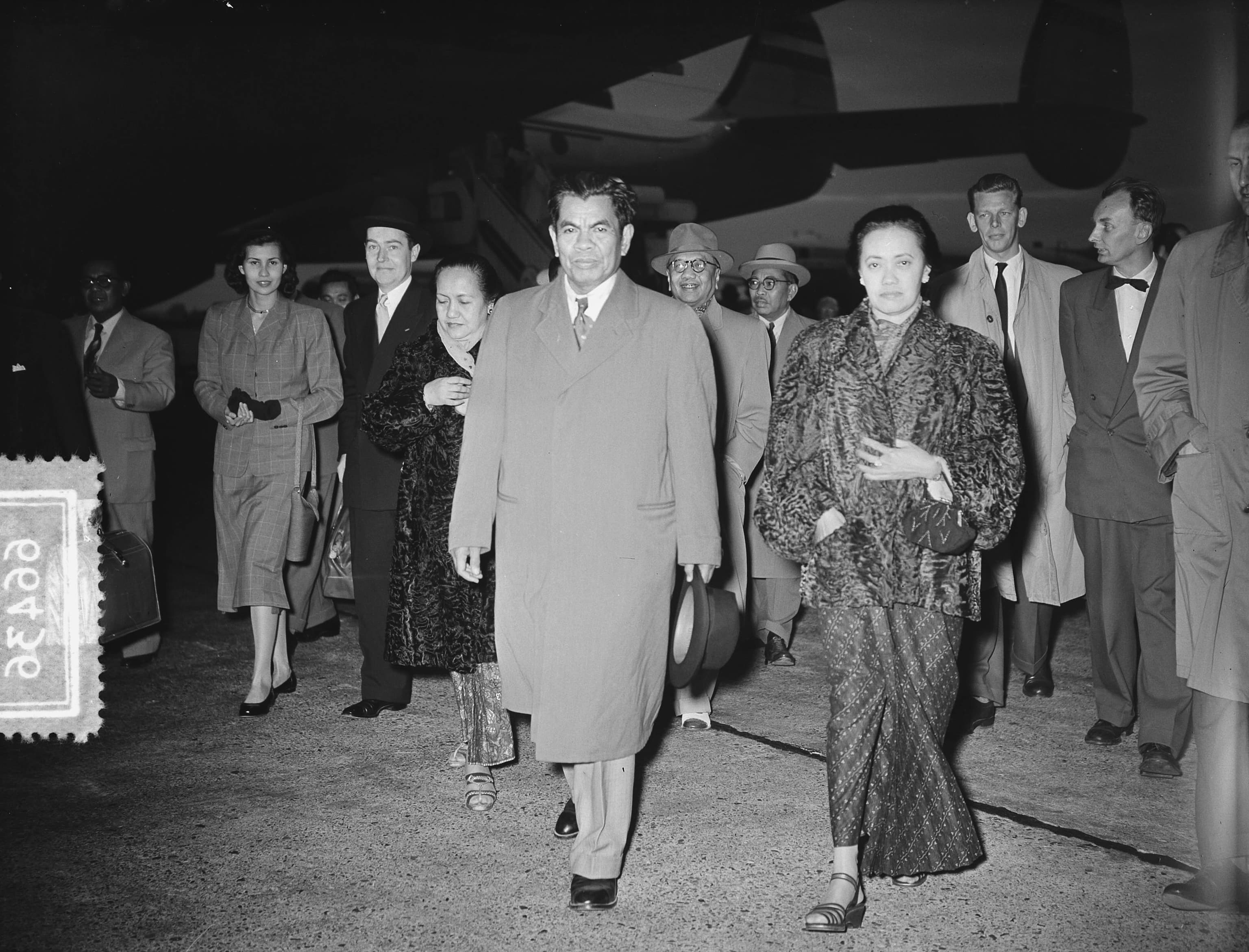
After the Second World War, the Republic of Indonesia declared independence in 1945. Following a bloody colonial war, the Netherlands formally transferred sovereignty in 1949. During the negotiations on the transfer of sovereignty, the two parties had worked on a draft cultural agreement promising that objects in the Netherlands that were of great cultural value to Indonesia would be returned.
From an Indonesian perspective this was important, because Indonesian politicians, artists and scientists were also trying to reinvent themselves intellectually in the years following independence. Objects of cultural value supported the search for a new national narrative. Muhammad Yamin’s call for the return of the Dubois collection in 1951 should thus be seen in the light of the developing Indonesian state and history. The human fossils, which he described as ‘Indonesian cultural objects’, fitted perfectly into the new story of Indonesia as the ‘cradle of humanity’ that Yamin was attempting to bring to the fore.
Due to the rapidly deteriorating diplomatic relations between the Netherlands and Indonesia, no actual restitution of cultural artefacts took place. It was not until the 1970s that the first objects were returned. When it came to the Dubois collection, it was agreed in the so-called Joint Recommendations of 1975 that the ownership of the collection should first be investigated. In official internal correspondence, this agreement was described by the head of the Dutch delegation, Robert Hotke, as a ‘first line of defence’ to prevent the collection from being returned.
Hotke’s defence strategy worked, and the investigation into the legal owner of the Dubois collection was never officially carried out. However, Dutch civil servants in various ministries did investigate which legal frameworks could be used to keep the Dubois collection in the Netherlands. The search produced arguments in both countries’ favour. One official asked Hotke about his preference regarding the Dubois collection. Hotke, who was also in close and friendly contact with the director of the National Museum of Natural History, Willem Vervoort, responded that his preference was for the ‘collection, including the Pithecanthropus fossils in particular, to stay in the Netherlands.’ The Dubois collection was evidently of great political and cultural value to the Netherlands too.
Today’s return of the Dubois collection to the Republic of Indonesia thus settles a long history of disagreement about the ownership of the collection. The research into the history of Dubois’ collection of fossils and palaeontological remains also teaches us something else, however: while the debate about the restitution of museum objects tends to focus on artefacts of cultural value, this discussion should be broadened to include other types of museum collections, such as those managed by Naturalis; for in addition to their scientific value, these collections are of great political and cultural significance.
In the case of the Dubois collection, this cultural significance cannot be viewed separately from the colonial history of the Netherlands and Indonesia. Tracing the cultural history of the Dubois collection reveals a story in which every facet of the (post-)colonial past is revealed: from the oppression of the local Indonesian population, to the development and flourishing of contemporary scientific disciplines in the Netherlands, the Netherlands East Indies and Indonesia, to the ambiguous post-colonial relations between the Netherlands and Indonesia in the second half of the twentieth century. In this way, the skull, thigh bone and molar that were found in the bed of the Solo River in 1891 have not only turned out to be the missing link in human evolution, but also a link between the colonial past and the present day.
Subscribe for the newsletter
Stay up to date every month about new publications, activities and more.
NIOD
Herengracht 380
1016 CJ Amsterdam
Visiting hours study room
Tue - Fri: 09:00 - 17:30 hour
Closed on Monday
Note:
The NIOD itself is open as usual on Monday.
Donate archival material to the NIOD?
The NIOD is an institute of the Royal Netherlands Academy of Arts and Sciences