Dr. Milan van Lange
Researcher
30 March 2023
·
Post
·
6 minutes
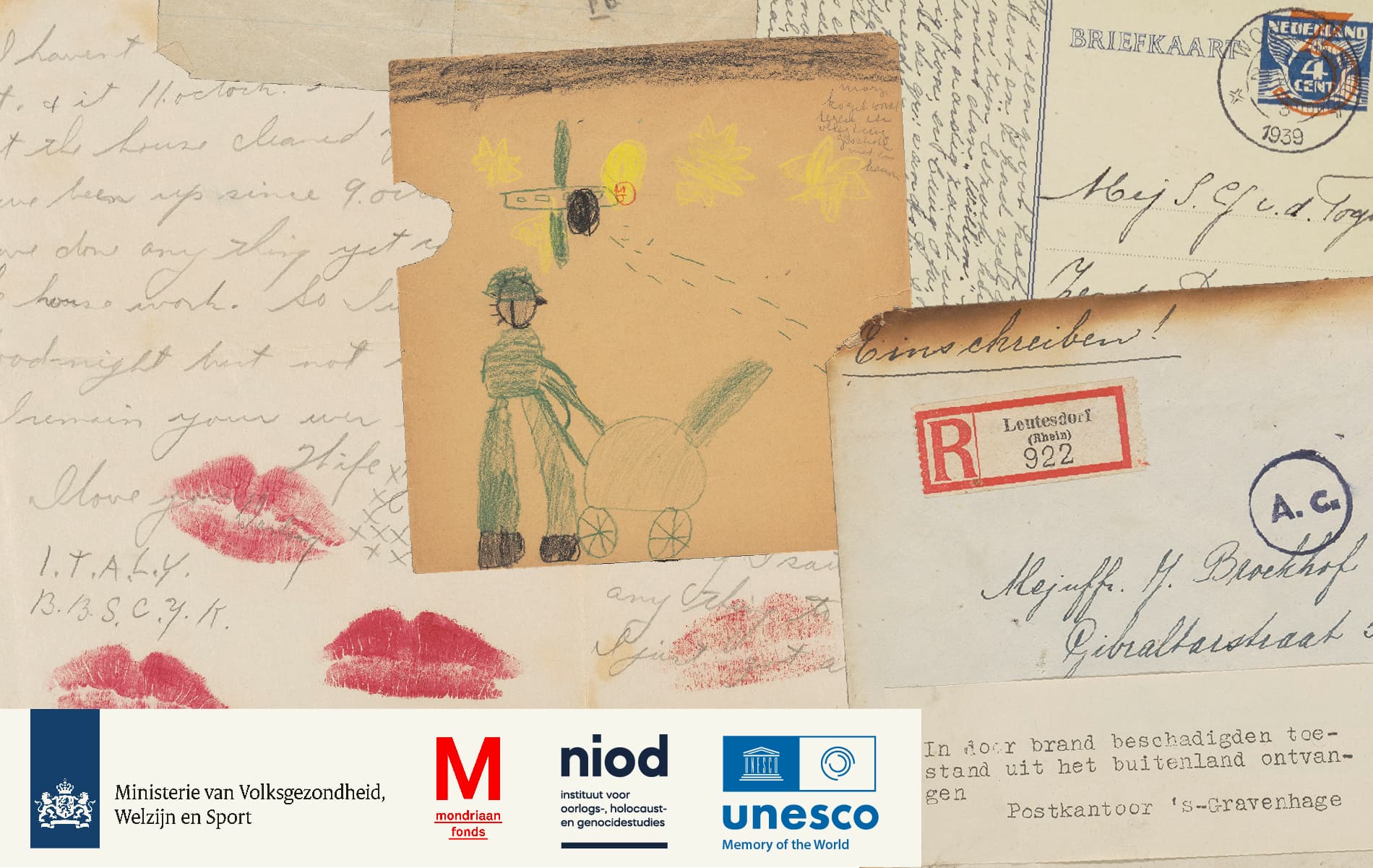
Since 2020, in the project ‘First-hand Accounts of War: War Letters (1935-1950) from NIOD Digitised', NIOD has been working to digitise the special collection of handwritten letters dating from the period before, during and after the German occupation of the Netherlands and the Indonesian War of Independence. This project involves more than 160,000 documents, many of them personal, which have been gathered at NIOD since the liberation in 1945. During the ‘Postbus NIOD’ campaign week (31 March-7 April 2023), NIOD is appealing to anyone who has personal war correspondence languishing in their attic at home to donate it to NIOD.
The importance of these documents was stressed back in 1944 by the Dutch Minister of Education, the Arts and Sciences, Gerrit Bolkestein, then based in London: ‘If future generations are to be fully aware of what we as a people have endured in these years [...], it is precisely the simple documents that we need: a diary, letters from a worker in Germany, [...].’ NIOD never stopped collecting these documents – and continues to do so to this day.
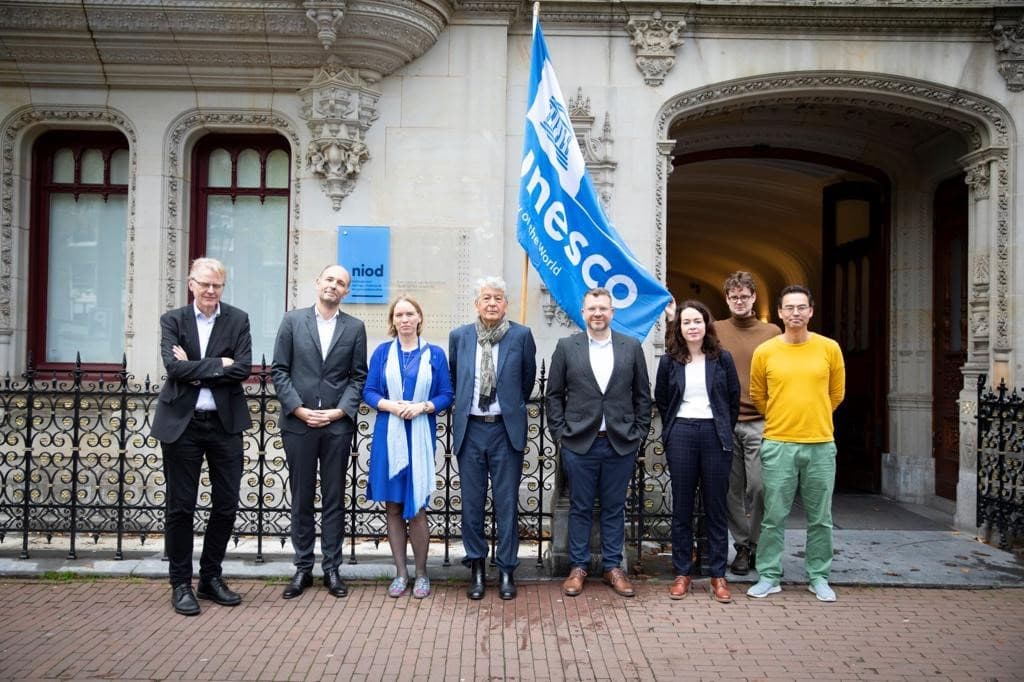
Personal documents, also known as ‘ego documents’, form a key part of the NIOD collection and are important to historians and other interested parties for various reasons. Wartime letters offer a fairly direct reflection of the personal communication between letter-writer and letter-receiver. Letters show how contemporaries captured their emotions, experiences and expectations in text, not how they were later made into a story, once the course of history was already known. Whereas eyewitness accounts from interviews in the 1980s and 1990s allow us to hear the voices of people who were relatively young during the war, letter-writers also include older people, for example, or people who were unable to recount their war experiences later. The importance of historical wartime letters was further highlighted in late 2022, when NIOD’s collection of wartime letters, together with the diary collection, was included in the Dutch UNESCO 'Memory of the World'-register.
NIOD not only collects and preserves the letters, but we also digitise them. In ‘First-hand Accounts of War’, we are working hard to conserve,
scan, transcribe and make the collection digitally available. The first important reason for doing this is that digitisation makes it easier to access the wartime letters. This means that the letters can no longer only be consulted in the NIOD reading room, but also, where legislation allows, can be searched and read online. This will soon be possible via the the NIOD website, via Archieven.nl, or via Network Oorlogsbronnen. Thanks to this online access, anyone who wants to will be able to search the letter collection. Moreover, the digitised and transcribed wartime letters are also being made available as a dataset for scholarly research. This is creating new opportunities for scientific historical research; the sources can be systematically searched and analysed using a computer, for example.
Digitisation is also important because it helps to preserve the original historical documents, many of which are fragile. In times when paper was scarce, many letters were written on flimsy scraps of paper or strips of old tea towel. As it will soon be possible to consult the collection from a screen, the original documents will be exposed to less wear and tear.
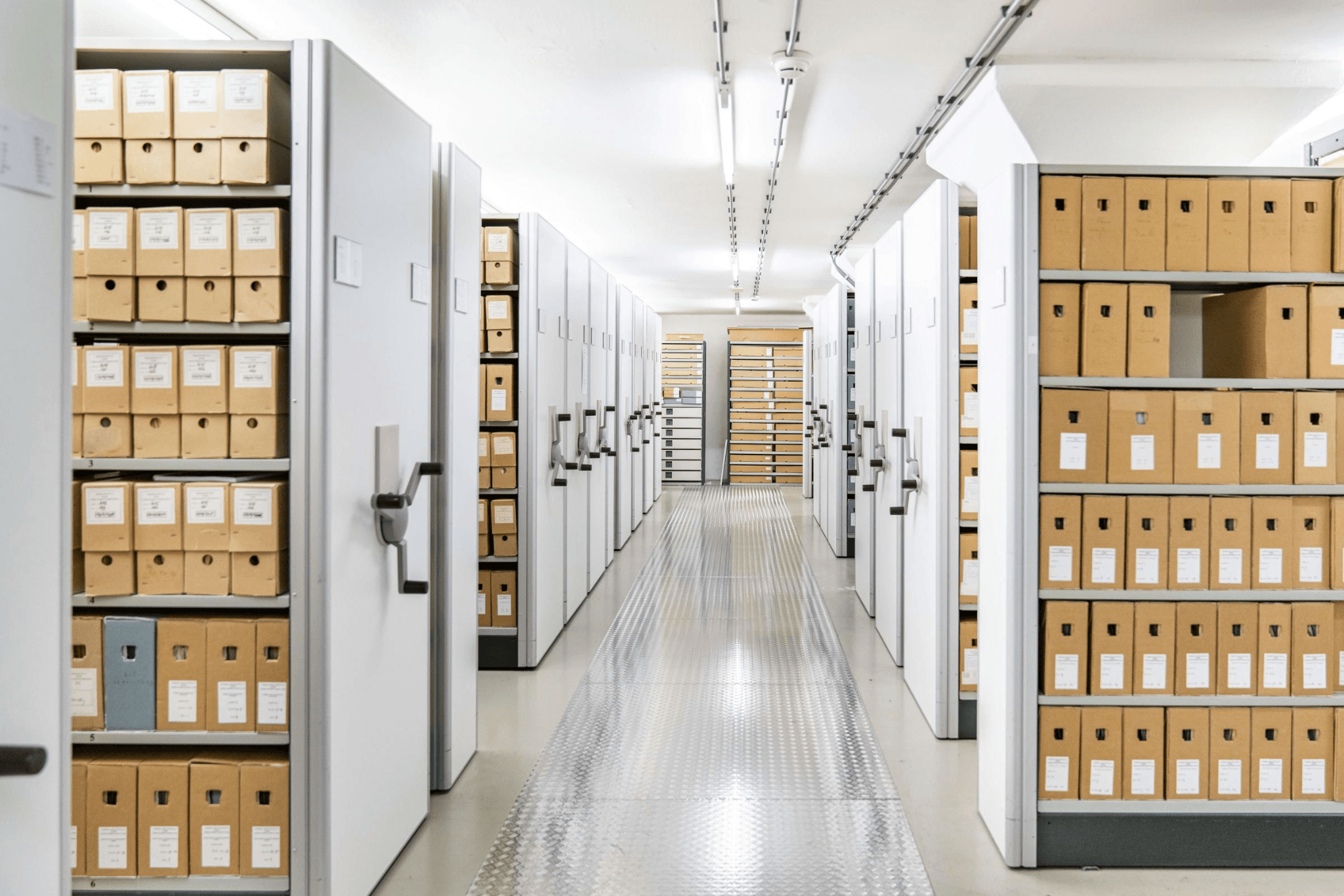
Over the past two years, the wartime letters in the current Collection 247: NIOD correspondence, have first been conserved, restored where necessary, and then scanned. The latter was carried out by a professional scanning company. After the scans were returned by the scanning company, we began preparations for the automatic transcription of the handwritten letters. This process of automatic transcription is also known as Handwritten Text Recognition (HTR), and is related to having typed text transcribed by computer, also known as Optical Character Recognition (OCR). To transcribe handwritten texts, we use the software program Transkribus, which was developed by the Austrian READ-COOP in consultation with archivists, scientists, historians, and IT specialists.
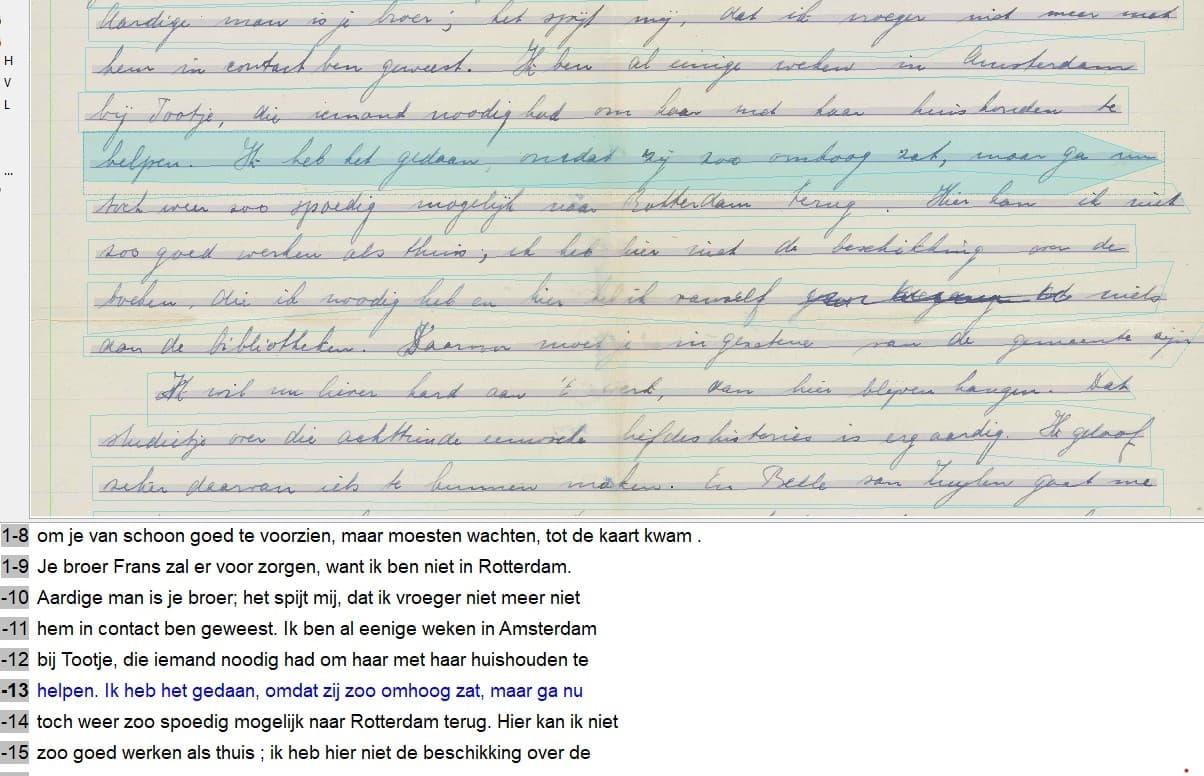
We first manually typed out a relatively small portion of the digitised letters – about 1,000 scans in total. We received help with this from enthusiastic volunteers, who, in addition to transcribing, also actively contribute and share their ideas with the project. Besides creating transcriptions, these volunteers also work on, for example, identifying and annotating meaningful elements in the letters, such as the names of the sender and recipient, or the place and time of writing. More on this in a future blog during the campaign week. With the virtually flawless transcriptions produced by manual transcription, also known as Ground Truth, we trained a computer model using the Transkribus software program. Training here refers to the process by which the computer learns to recognise handwritten text and then automatically transcribe it. These computer models are trained using Artificial Intelligence (AI) technology.
Producing acceptable results proved to be a process of trial and error. The quality of the automatic transcriptions is expressed as an error percentage (ideally as low as possible) at the level of recognised characters in the text, known as the
Character Error Rate (CER). Our experience with training and testing the computer models suggested that up to a certain point, more letters and greater variation in different handwriting yielded a more useful computer model for automatic transcription. With around 1,000 Ground Truth transcripts as training material for the computer, we now seem to have reached the point where adding more material and greater variation to the computer training is no longer producing significantly improved results (in other words, a lower CER).
The final computer model that we have trained on the Ground Truth set has become, in our humble opinion, rather good at automatically transcribing scans of handwritten Dutch. The transcriptions made with the computer model are not perfect, but they are readable and can be searched perfectly well with a computer. We have now achieved an error rate (CER) of 4.7%. This means that, on average, 95.3% of the characters in a handwritten text are correctly recognised and transcribed by the computer. The model can effectively read, recognise, and automatically transcribe Dutch handwriting from the period 1935-1950. We will therefore shortly be using the model to automatically transcribe all the wartime letters that have already been scanned.
The computer model we trained has also been made available to interested parties, researchers, and other archival and heritage institutions so that they can apply it to the automatic transcription of handwritten Dutch from the mid-twentieth century. A trial version of the model is available online and can be tested by anyone on their own scans. This research project is funded by:
Researcher
Beleidsadviseur Collecties en Diensten
Information Analyst
Stay up to date every month about new publications, activities and more.
Herengracht 380
1016 CJ Amsterdam
Tue - Fri: 09:00 - 17:30 hour
Closed on Monday
Note:
The NIOD itself is open as usual on Monday.
The NIOD is an institute of the Royal Netherlands Academy of Arts and Sciences