
Drs. Floris Kunert
Researcher / PhD Candidate
23 October 2026
·
Post
·
8 minutes
Introduction
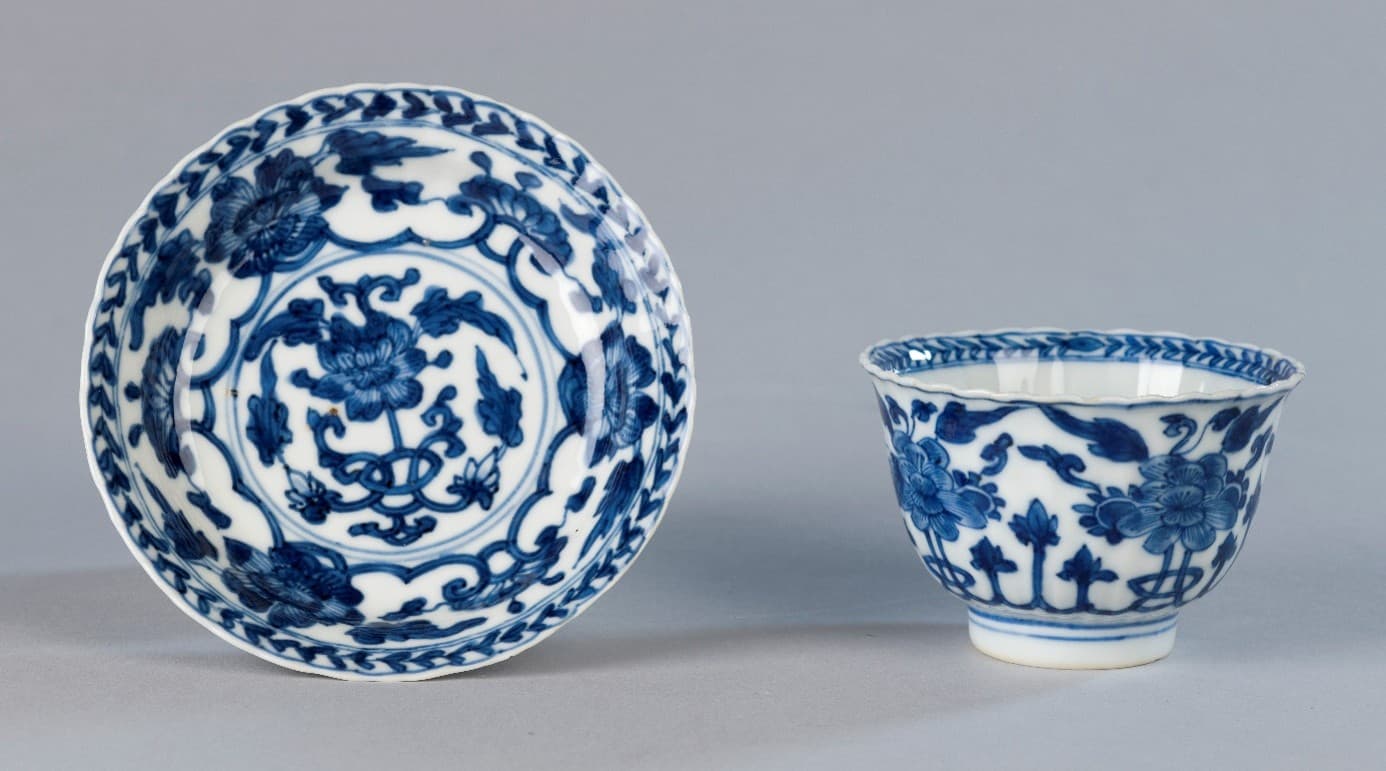
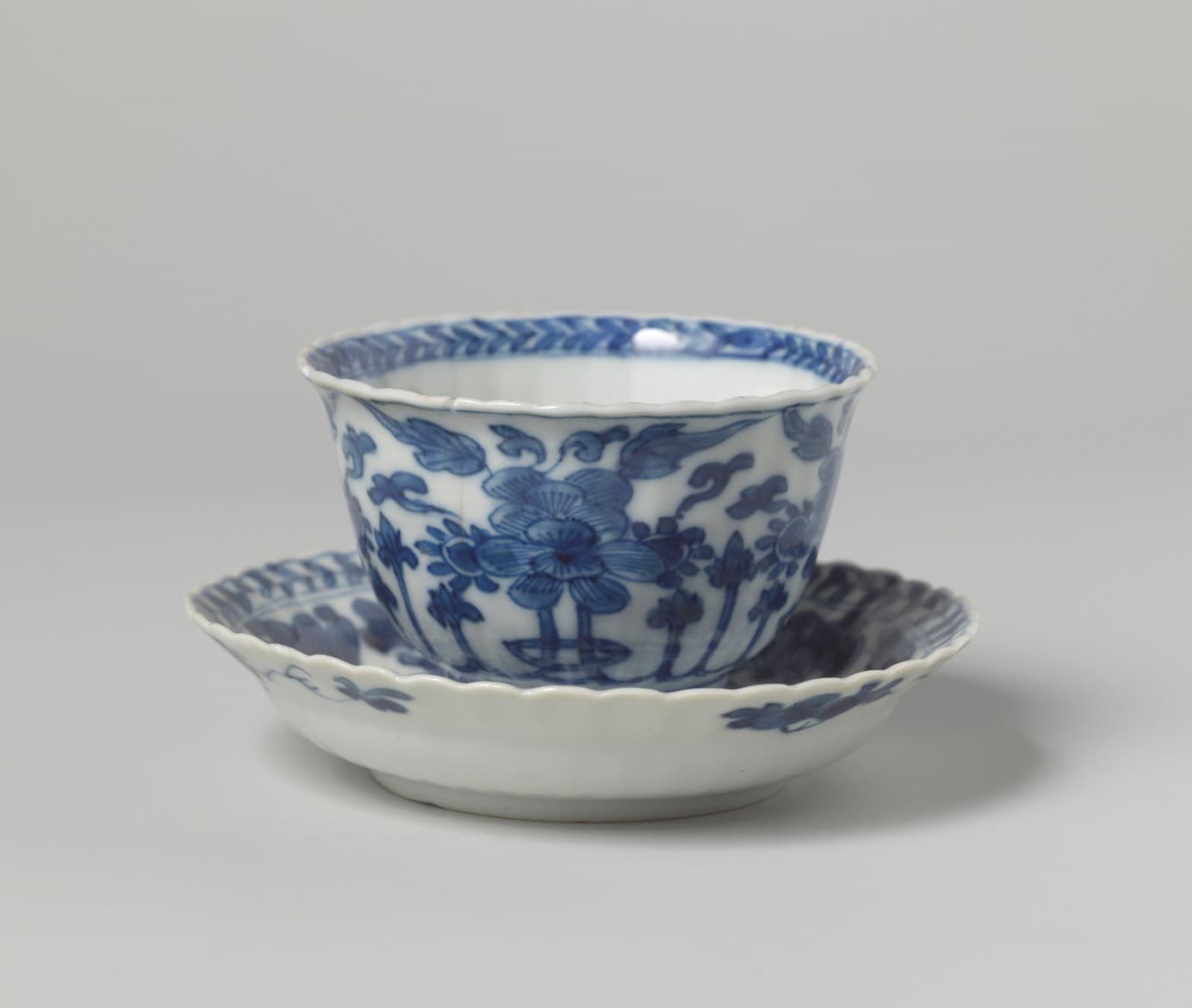
In 2025, the Expert Centre Restitution was asked to research the provenance of a set of Chinese porcelain with floral motifs consisting of six cups and ten saucers, dating from the first quarter of the 18th century. The investigation was prompted by a request for restitution of the objects, which are part of the Netherlands Art Property (NK) Collection, a collection of artworks with a history connected to the occupation of The Netherlands. A complicating factor in this research was that many similar cups and saucers were produced, and the objects in question were recognized as their own by several Jewish people who were robbed of cups and saucers during the war. Using these objects as an example, this blog highlights the difficulties associated with generic items in the context of restitution.
This blog has been written by researchers at the NIOD’s Expert Centre Resitution (ECR). The ECR conducts academic research into looted art and the expropriation of cultural property. It also carries out independent provenance research at the request of the Restitutions Committee, the Colonial Collections Committee or the Cultural Heritage Agency of the Netherlands. However, neither the ECR nor the NIOD provide advice on restitution cases.

Nothing is known about the history of the cups and saucers, except that they were most likely repatriated to the Netherlands from Germany shortly after the war. The objects were initially managed by the Netherlands Art Property Foundation (SNK), which was tasked by the Dutch government to trace and retrieve art that had ended up in enemy hands during the occupation of The Netherlands. The history of the objects varies and includes voluntary sales as well as loss as a result of persecution by the Nazi regime.
The circumstances in which the cups and saucers in question were lost are unknown; they could have been sold by a regular antique store or lost by a Jewish owner. The recovery of regular household items was considered an impossible task, even though the SNK felt obligated to meet the expectation 'that we will make a serious attempt to also recover these items'.
Thousands of objects were returned to the Netherlands after the war. From 1948 onwards, the Ministry of Finance assumed responsibility for the restitution of retrieved objects that had been looted or otherwise involuntarily taken from their previous owners or their heirs. In the case of the cups and saucers, they carried out research in response to multiple requests for restitution.
In 1950, the porcelain cups and saucers were displayed at an exhibition organized by the SNK. Such exhibitions were organized in an attempt to reunite involuntarily lost objects with their previous owners by providing the opportunity for people to recognize their property. At these occasions, it was common that multiple people recognized the same object as theirs, especially in the case of applied art such as furniture and ceramics. The same happened with the cups and saucers. Because their design was quite common, no less than eight visitors recognized the cups and saucers as their former property. The attempts to retrieve fragments of their former lives reveal their circumstances and struggles.
‘These goods were owned by my deceased grandmother, of whom I am the only heir’, one visitor wrote in response. All her possessions were stolen during the war. Another visitor thought it was 'very well possible but for me not certain' that the cups were left behind by his father, who was forced from his home in August 1942. They were also recognized by a woman who ran an antique shop with her husband in Amersfoort. When they went into hiding on a farm, everything was taken away. On the 18th of April 1945, barely two weeks before the liberation, they were discovered by the SS. Her husband was shot behind the chicken coop. She escaped with their two children. About the outcome of her request for restitution she was not very hopeful: ‘When my late husband was shot dead before my own eyes I had to resign to it and I also will probably have to now'.
Many of the claimants voiced their awareness of the problems involved. One of them stated that he could not identify the items, 'but I cannot imagine that anyone else would be able to, regarding these fairly common things'. After writing back and forth it became clear the situation was impossible: 'I wish you luck with the Salomo's verdict you will have to issue'. Another visitor wrote about his experiences at the exhibition: ‘When I visited the exhibition for the first time, I heard visitors tell each other: “see, that was ours”, but at a second visit I heard the same thing said by other people concerning the exact same objects that I have now claimed myself’.
The authorities were thus faced with a nearly impossible situation: what to do when multiple people, all of whom evidently suffered from the Nazi regime, requested restitution of the same object, when no verifiable information about the objects was available? The authorities tried to gather additional information, both from the claimants and from the archive of Liro-Sarphatistraat, a German looting institution. The response confirmed that many of the applicants indeed lost ceramics, but the available information was so generic that identification remained impossible.
Given the circumstances, most applicants responded rationally to the difficulties of identification: ‘I understand your difficulties in matters like these completely, and I myself cannot provide a solution either (…)’, an applicant wrote. Another stated: ‘I can declare under oath that I once had a similar item, but not that this is the same item I saw at the exhibition in the Rijksmuseum. Nobody can, because it is porcelain’. One applicant was more indignant, and indicated that he did not agree that his claim was put aside, 'as long as you don't state that other claims were more convincing and will be honored, or that fate will decide about the objects'.
The responses show the scale of suffering under the Nazi regime. Each of the applicants had to deal with loss of family, looting of property and terror. Many described their individual experiences in detail. One of the applicants wrote an emotional letter in which she described her struggle to get some of the pieces of her shattered life back together: ‘It was taken away from us so easily, and it is so difficult to get everything back again’. The fact that so many people identified the cups and saucers as their own is a reflection of the scale of the persecution, the losses that accompanied it and the difficulties of retrieving pieces of those shattered lives.
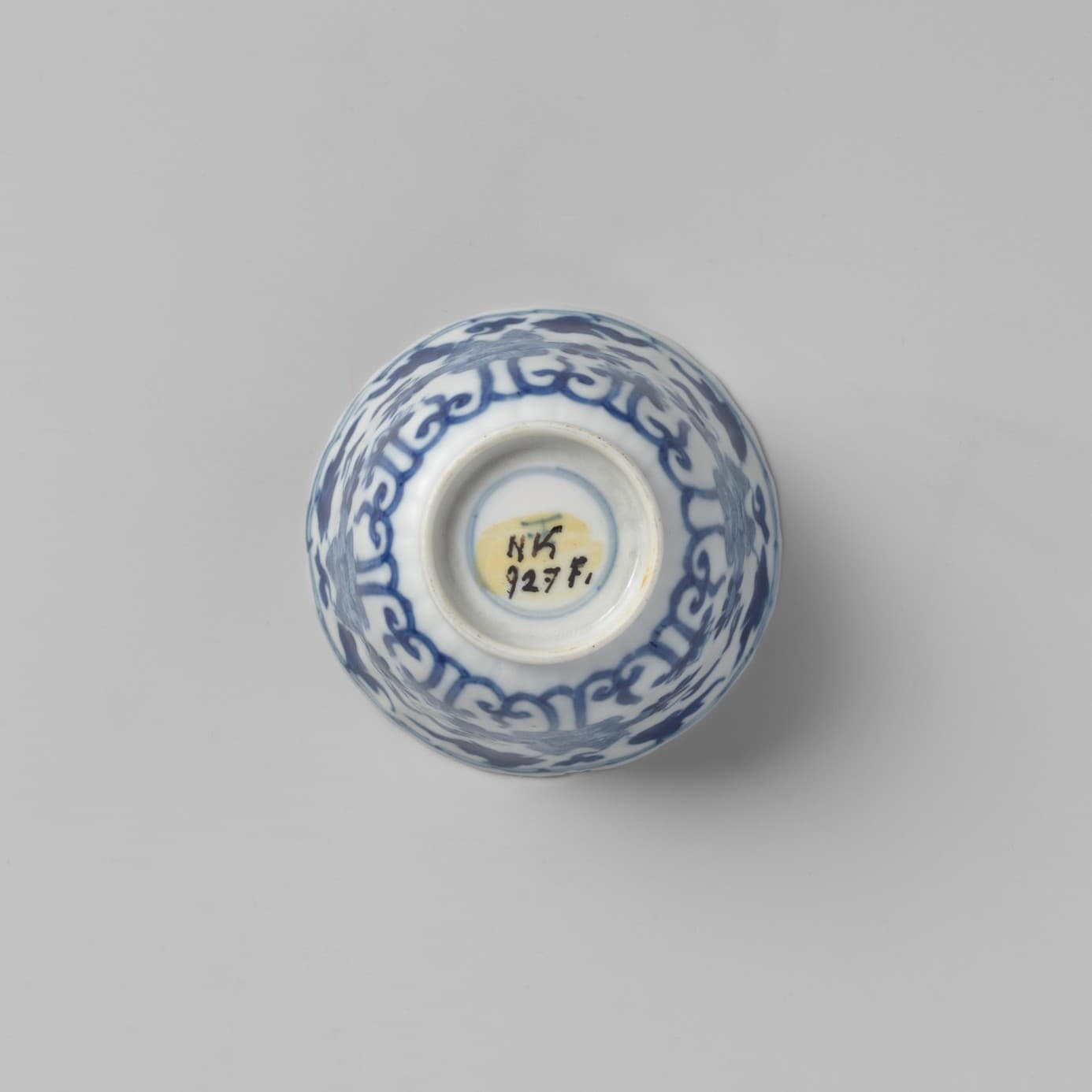
After the war, the Dutch government recovered thousands of antiques, often in bulk, on the grounds that they got into enemy hands. Establishing which of these objects were lost involuntarily in order to provide the original owners with the opportunity to retrieve them proved almost impossible. Information needed to establish ownership was lost as a result of the Nazi regime. The authorities were ultimately forced to make a decision on the basis of the information at hand. In the case of the cups and saucers, it was concluded that there was insufficient information available to conclude the objects were originally owned by any of the claimants.
At the end of the 1990's, moral upheaval dominated the perspective on the post-war efforts related to the recovery and restitution of art. The fact that after the war, the authorities had requested the claimants to provide additional information was interpreted as ‘heartless’ and ‘bureaucratic’. The restitution efforts after the war indeed contained many imperfections, but as the highlighted stories show, the inability to resolve these cases does not in itself indicate a lack of effort or interest. It rather shows that the authorities were also handed problems that they were unable to solve.
The passage of time has not provided solutions to these problems. Identification is still a major issue in many contemporary restitution cases. A significant part of rejections of restitution claims involves an applicant who recognizes a similar object to the one that was lost by them or their family. This is especially the case with generic items. The ECR’s research into the history of the cups and saucers has not led to an identification of their previous owner. Ultimately, we are still faced with the same limitations the authorities were confronted with right after the war.
Researcher / PhD Candidate

Researcher
Blijf elke maand op de hoogte van nieuwe publicaties, evenementen en meer.
Herengracht 380
1016 CJ Amsterdam
Tue - Fri: 09:00 - 17:30 hour
Closed on Monday
Note:
The NIOD itself is open as usual on Monday.
The NIOD is an institute of the Royal Netherlands Academy of Arts and Sciences