The Violence of Hunger
Starvation, Famine, and Responsibility
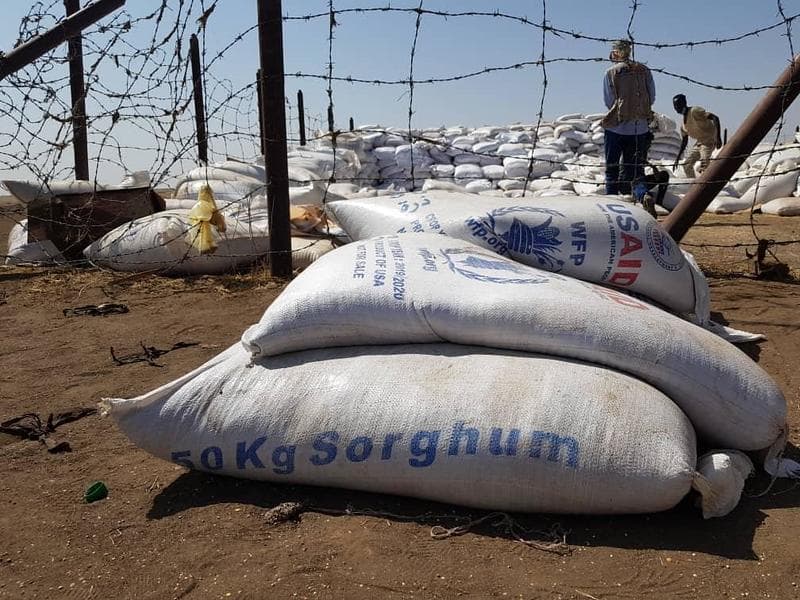
Modern famine is man-made. It is political and used as a tool of violence, rather than occurring as a natural disaster. This longread explores how hunger and mass violence are connected, how we can recognize it, and hold those responsible to account.
21 May 2026
·
Longread
·
23 minutes
WikiCommons
Introduction
In August 2025, experts from the Integrated Food Security Phase Classification system (IPC), a globally recognised system that rates levels of food insecurity in a region, declared famine in Gaza. It made official what many experts had warned for months. The crisis in Gaza has worsened at a shocking pace under Israel’s blockade. By tightly controlling food aid and essential supplies, Israel has pushed the territory into famine conditions. Airstrikes have destroyed farmland, greenhouses, and water systems, wiping out much of Gaza’s ability to grow its own food. Mass starvation is also currently unfolding in Sudan, South Sudan, Somalia, Ethiopia, Syria, and Yemen. In all these cases, hunger is not a natural disaster or an accident. It is man-made: the outcome of human decisions. Often it is used as a weapon of war or genocide.
Hunger and mass violence often appear together: violence causes hunger, and hunger can be a form of violence. In this longread, we will explore the relation between the two, and ask how we can recognize starvation and famine, and how we can respond to it. What is the relationship between hunger and mass violence? How can we recognise, understand, and react to starvation, and famine?

What is famine?
Famine is a situation in which a population experiences widespread hunger and malnutrition, leading to health consequences such as disease, death, and fertility decline. It has both short-term and long-term effects on individuals, their descendants, and society.
On a biological level, famine triggers a survival process in the body: once fat reserves are gone, the body starts taking energy from the organs and muscles. This can eventually cause organ failure and death. For children, the damage can last a lifetime. Those who suffer severe malnutrition in their first two years of life are more likely to face illness and long-term effects on growth and learning.
Famine also has economic consequences. Food prices rise, black markets emerge, rationing becomes common, property crimes increase, and temporary migration often occurs as people seek sustenance. Moreover, famine leaves deep social scars. People live with fear, shame, and the difficult choices they made to survive. Famine destroys social structures and populations, with consequences that can endure long after it ends.
These days we produce enough food to feed the world. We have the technology and infrastructure to ensure it reaches even the most remote locations. But when those in charge choose to neglect food crises, obstruct relief, or deliberately create hunger, people can starve. Government negligence, economic shocks, climate change, war, and reduced assistance are not enough to cause a famine on their own. Each of these factors can cause food insecurity, but modern famine results from a combination of factors. It is often created and aligned as a result of choices taken by national and international political, economic, and military actors. In particular, famines now occur most commonly during war, occupation, or under authoritarian regimes.
Today, two famines grab the headlines: Gaza and Sudan. Gaza is the perhaps most visible and best documented example of how famine is used as a weapon of war, and how it can be engineered through blockade and siege. The current famine in Gaza has been enabled by decades of Israeli blockade, in particular the expansion of sanctions in 2007, which the Israeli government described as putting Gazans ‘on a diet’. The sanctions further restricted food imports and cut off Gazans from the Israeli labour market. It restricted household non-food items, limited spare parts for essential infrastructure, such as sewage and healthcare, and reduced fuel and energy supplies. Fishermen were harassed by the Israeli navy and their fishing area limited, agricultural land along the barrier was destroyed. The impact on Gazans’ health and food security was severe. The bombing campaigns and tightened siege that followed Hamas’s deadly attacks on October 7th 2023, tipped Gazans into one of the fastest developing famines in modern history: a famine amply forewarned, but which the international community failed to address or prevent.
In Sudan, famine has affected people across the country, and on both sides of the conflict. It has multiple causes. Like in Gaza, famine in Sudan is used as a weapon of war. This is most visible in north Darfur, where Internally Displaced Person (IDP) camps and the city of El Fasher were besieged by the paramilitary Rapid Support Forces (RSF). But famine in Sudan is also the politically ‘acceptable’ fallout of military strategy or leaders’ unwillingness (and sometimes inability) to alleviate more general food insecurity caused by war. Although the war between the Sudanese Armed Forces (SAF) and the RSF precipitated the current famine, the allies of both parties, and the international community, have done little to avert or alleviate it.
Famine has a long history in Sudan. It is rooted in the capital Khartoum’s neglect of rural areas, the marginalisation of certain groups, and the weaponisation of hunger for political repression. This reminds us that famine, when it occurs, is the culmination of political marginalisations and inequalities already present in society. These, too, are the result of choices made by political and economic elites.
Hunger and violence
Sometimes, hunger is clearly a form of violence, such as in Herbert Backe’s “Hunger Plan” (1941) during the Second World War (WWII). Backe was one of Nazi Germany’s top food planners, and aimed to starve millions in the Soviet Union to feed Germany’s army and civilians. Food was taken from Soviet lands, while “surplus” populations — Slavs, Jews and other targeted groups — were deliberately starved. Millions died under these policies. This hunger was not simply a by-product of war but a clearly planned tool of violence and oppression. Backe’s “Hunger Plan” was direct and intentional: we see a clear perpetrator, a deliberate plan, and a direct link to human suffering.

Victims and survivors of hunger
Hunger is not just about a lack of food. It is about who can access it. Those already disadvantaged, like the poor, landless, or politically marginalised, are usually hit hardest. During the Holodomor famine in Ukraine in 1932–33, the Soviet State under Stalin starved millions of rural peasants by seizing their harvests. During WWII in occupied Europe, German food rationing reflected racist policies, giving some groups better access than others. Jewish people and prisoners of war, in particular, were deliberately given less food. Many Jews were banned from shops, and those in hiding relied entirely on others for survival. The most vulnerable had the hardest time surviving.
When faced with the threat of hunger, people do everything they can to get food, including turning to the black market and buy, trade or sell goods outside the official system. Sometimes people start stealing, smuggling or doing sex work in return for food. In Cologne in 1946, Cardinal Josef Frings declared that it was not a sin to steal food in extreme need. Stealing food to survive became so common in many German cities that Cardinal Frings’ name was turned into a verb – ‘fringsen’ – and used to both describe and legitimise theft to prevent hunger.

Measuring and Ending Famine
The Integrated Food Security Phase Classification System (IPC) is the internationally recognised 'gold standard' for measuring food insecurity. Created in 2004 by the UN Food and Agricultural Organisation (FAO) and the Somalia Office’s Food Security and Nutrition Analysis Unit, the IPC aims to improve decision-making and cooperation around food security. It collects and analyses data on food, malnutrition, and mortality against global thresholds. Information is then shared via the IPC website, and with stakeholders such as governments, International Non-Governmental Organisations (INGOs), and UN agencies.
The IPC uses a colour-coded five-phase scale, from green meaning none or minimal food insecurity (stage 1), through to famine (stage 5), coloured in deep red. The IPC declares a famine when 20% of households experience extreme food lack, a third of children are acutely malnourished, and two in 10,000 people die from malnutrition-aggravated causes or starvation per day. Given the political sensitivity of famine, the data is reviewed by the Famine Review Committee, an independent panel of food security, nutrition, and health experts.
While largely effective, the system faces significant challenges. Data availability and quality from remote and conflict-affected areas varies. The data can miss more localised food insecurity. Gender and intersectional vulnerabilities are poorly integrated into the measurement system. Crucially, no globally standardised malnutrition threshold exists. Findings can also be difficult to translate into action, and they are often political dynamite. The governments of Israel (2025), Sudan (2024), and Ethiopia (2021) all rejected IPC findings of famine: citing fabrication, threats to their sovereignty, transparency concerns, and methodological issues. Sudan and Ethiopia subsequently withdrew from the IPC. Wrangling over these issues, frequently overshadows hunger on the ground and delays action. Interventions should precede famine declarations, not follow them. The IPC can help do this, but only if governments and aid agencies listen to them.
Ending famine seems simple. Often understood as a biological event that affects individuals, ending it is mainly considered a matter of enough food, clean water, shelter, health services, refeeding, and supplementary nutrition. Though such technical interventions are necessary, they do not stop ongoing famine, nor do they mitigate its broader, long-term effects.
Even if assistance rolls in, people die for months afterwards from the accumulated effects of starvation. Experiencing famine affects lives, livelihoods and relationships long after the event. In some cases, the effects last for generations – engraved in genetic changes that increase ill-health and mortality. Famine transforms the economic and social fabric of society, diminishing people’s ability to work. This affects productivity and needs to be met by a heavy investment in healthcare. Socially, famine can inflict considerable collective trauma. Shame, broken relationships – both individual and collective – and taboos can loom large in survivors’ memories.
Those who weaponise hunger know that starving a society effectively dismantles it. Ending famine requires not only dealing with the extended human, economic and social fallout. It requires recognising that famine represents a political failure of epic proportions, that needs to be followed by accountability, of individuals and – perhaps more importantly – states.
Politics of hunger
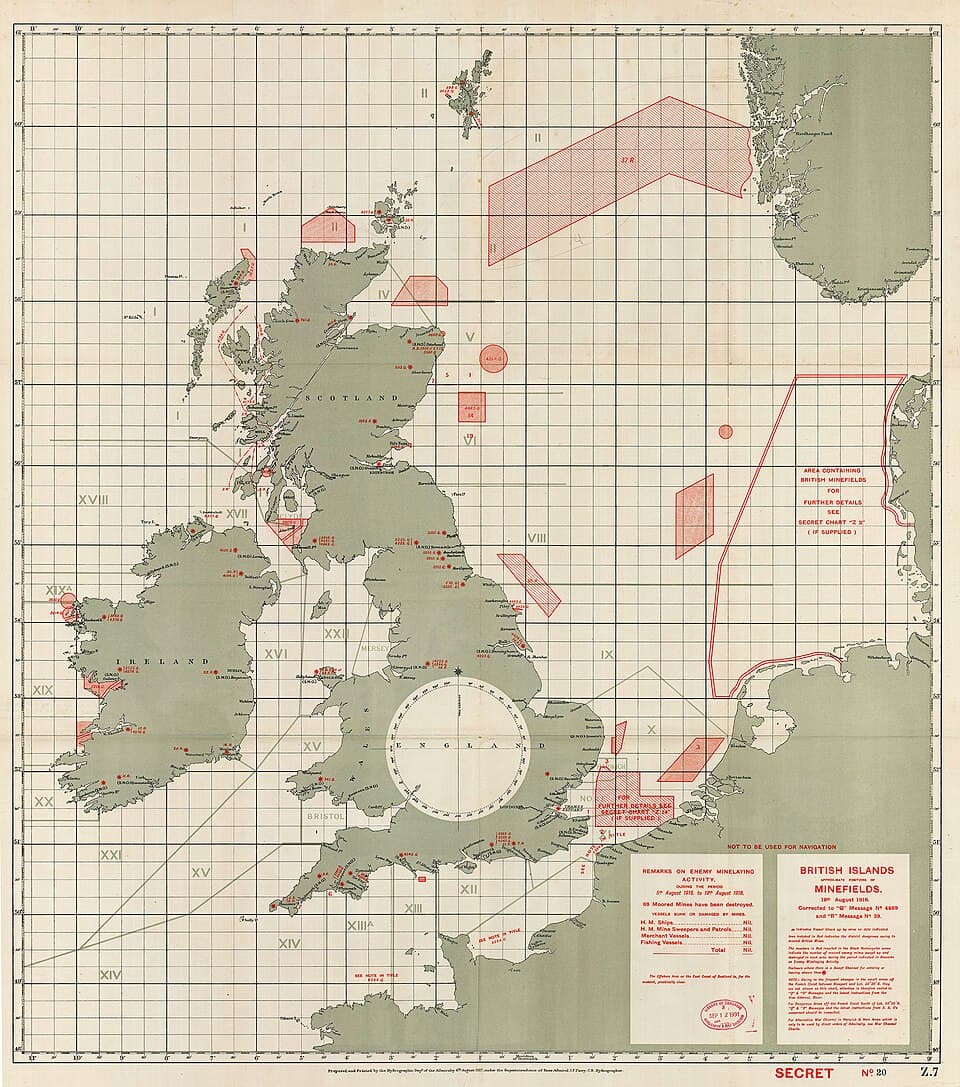
The decision to recognise, or neglect to recognise, a situation of mass hunger as famine is political and politicised. As Germany’s history shows, so too is the memory of hunger and famine. In WWI the Allies (British, French, Russian, and later also Italian and American fleets) blockaded Germany to cut it off from nitrogen, glycerine, and fats that were necessary for agriculture, food processing, and making explosives and munitions. Economic and total warfare caused the collapse of agriculture, shortages of labour, draught animals, and coal, and the breakdown of transport. Many civilians – especially in urban areas – became unable to secure even the most basic foodstuffs.
After defeat, many Germans began to say they hadn’t lost the war on the battlefield but at the kitchen table. The blockade was blamed for crushing German ‘morale’ to fight. Many felt they had been starved into surrender. Hunger became part of a national story of victimhood, in which the Allies had tried to exterminate Germans with the weapon of starvation.
Two decades later, Nazi leaders used this memory to justify violent food policies. They made food security a central war goal: brutally exploiting occupied lands, starving millions in Eastern Europe and others who were framed as ‘useless eaters’. The memory of the WWI hunger period became a political tool used to shape ideas about who was supposedly deserving of food, and who could be left to starve.
Naval minefields around the British Isles, 19 August 1918. These minefields were part of Britain’s blockade strategy in WWI. By blocking key routes, they made it dangerous for German submarines and merchant ships to reach the Atlantic, forcing vessels into patrolled channels. Combined with surface patrols and steel nets, the mines helped restrict resources to Germany.
Accountability and challenges
When we speak of ‘accountability’ for the violence of starvation, hunger, and famine, we often think of legal accountability. The two most well-known international legal mechanisms for accountability are the International Court of Justice (ICJ) and the International Criminal Court (ICC). The ICJ was established in 1945 by the UN Charter. All UN Member States are automatically members. The ICJ deals not with individuals, but with states.
The ICC, by contrast, is a treaty-court of individual criminal accountability: it can try individuals accused of war crimes, crimes against humanity, and genocide. The Rome Statute – which lays out the Court’s jurisdiction, powers, procedures, and organisation – was diplomatically negotiated in 1998. States are not automatically members, but must sign and ratify the Rome Statute. To date, 125 countries have done so.
The ICC can only prosecute individuals who are nationals of a ‘State Party’, or who commit violence on the territory of a State Party. Both the ICJ and the ICC are legal mechanisms which could hold an individual or state accountable for starvation as a form of violence. The ICJ can order ‘provisional measures’ (instruct a state to behave in a specific way), advisory opinions (answer a technical question of law), and legally classify state-behaviour (make a finding that particular actions amounted to a violation of treaty obligations).
In terms of provisional measures, the ICJ has explicitly engaged with starvation in regards to both the former Yugoslavia and Israel. In 1993, amidst the widespread violence across the territory of Yugoslavia, the state of Bosnia and Herzegovina initiated proceedings against the Federal Republic of Yugoslavia (FRY). Bosnia and Herzegovina requested provisional measures: for Yugoslavia “to cease and desist immediately” a number of actions, including “the starvation of the civilian population”, and “the interruption of, interference with, or harassment of humanitarian relief supplies”.
In April 1993, the ICJ ruled that the FRY was under obligation to “take all measures within its power to prevent the commission of genocide". It did not explicitly order provisional measures in relation to food or aid. The Court also issued provisional measures in January 2024 regarding Israel’s conduct in the Gaza Strip. This time, the issue of hunger was more explicit. The judges ordered that Israel must “take immediate and effective measures to enable the provision of urgently needed basic services and humanitarian assistance”. These measures were modified twice – in March and May 2024 – to reflect what the judges called the increasing “humanitarian nightmare” created by the lack of aid.
Although provisional measures like these are important, the ICJ is a purely legal mechanism, and it has no power to enforce them. The twice-updated provisional measures ordering Israel to allow basic services and humanitarian assistance into Gaza reflected the worsening situation, but also the fact that Israel had not complied with earlier measures.
The ICJ can also issue ‘advisory opinions’: technical answers to specific legal questions. In 2004, after a request from the UN’s General Assembly (UNGA), the ICJ handed down an ‘Advisory Opinion’, on Israel’s construction of a wall in the Occupied Palestinian Territory. The judges considered the ‘International Covenant on Economic, Social, and Cultural Rights’, which includes the right “to be free from hunger”, and the right to adequate food. They considered the World Food Programme’s report that Israel’s construction of a wall had “aggravated food insecurity” for civilians in the Occupied Palestinian Territory, as well as a report by the UN’s Special Rapporteur on the Right to Food, stating that the wall was “cutting communities off from their land and water”, and forcing Palestinians to migrate.
The advisory opinion ruled that Israel’s construction of the wall was “contrary to international law”. On 22 October 2025, the ICJ delivered another advisory opinion regarding Israel’s obligations in the Occupied Palestinian Territory. This time, the UNGA asked the Court about Israel’s obligations to “ensure and facilitate the unhindered provision of urgently needed supplies essential to the survival of the Palestinian civilian population”. The judges unanimously ruled that Israel had an obligation “to ensure that the population of the Occupied Palestinian Territory has the essential supplies of daily life, including food, water, clothing, bedding, shelter, fuel, medical supplies and services”.
Advisory opinions are not legally binding. But they do carry authoritative weight. It is often up to the question-asker to decide whether and how to give effect to the Court’s advice. In the case of the ICJ’s recent decision, UN member states who had recently withdrawn funding from the United Nations Relief and Works Agency (UNRWA) might decide, for example, to resume that funding, in light of the Court’s opinion that Israel’s claims of UNRWA’s bias were not sufficiently proven. Much like with provisional measures, however, the ICJ itself has no control over any of this.
Thirdly, the ICJ can legally classify the behaviour of states. These decisions are usually the ones that garner the most publicity. They are also often the slowest in coming. Again, in regard to starvation specifically, the Court has been engaged with violence in the former Yugoslavia and Palestine. In 2007 the ICJ classified the July 1995 massacre of more than 8,000 Bosniak Muslim men and boys by the Bosnian Serb army as a genocide.
In determining whether Serbia – as a state – could be held responsible, the judges noted that by February 1995 the Bosnian Serb Army was “restricting the movement of international convoys of aid and supplied to Srebrenica and other enclaves”. In spite of this, the Court ruled that the Serbian state did not have the “intent” to commit genocide until mid-July 1995, and thus could not be held accountable at the level of the government.
The ICJ is also engaged in ongoing proceedings brought by South Africa against Israel, accusing Israel of committing genocide against Palestinians in the Gaza Strip. One ‘act’ of genocide listed in the Genocide Convention is: “deliberately inflicting upon the group conditions of life calculated to bring about its physical destruction in whole or in part”. Those proceedings are ongoing. An official ICJ classification of Israel’s conduct in relation to the genocide convention – and the role of hunger, starvation, and famine within that classification – is therefore still pending.
The Rome Statute of the ICC mentions ‘starvation’ only once, in its provision for the prosecution of war crimes. A ‘war crime’ under the Rome Statute, can include “intentionally using starvation of civilians as a method of warfare, by depriving them of objects indispensable to their survival, including wilfully impeding relief supplies…”. This is the war crime of which the ICC’s prosecutor accuses Israel’s Prime Minister Benjamin Netanyahu, and former Minister of Defence Yoav Gallant. In November 2024, ICC judges issued warrants of arrest for Netanyahu and Gallant, specifically including the war crime of starvation.
But that is not the only way in which starvation might be prosecuted on an individual level at the ICC. The definition of genocide, and its inclusion of the act of “deliberately inflicting on the group conditions of life” calculated to bring about the destruction of a “national, ethnical, racial or religious group, as such” implies the possibility of starvation being prosecuted as an act of genocide at the ICC. In its definition of acts constituting Crimes Against Humanity, the Rome Statute classifies one such act – ‘extermination’ – as including “the intentional infliction of conditions of life, inter alia the deprivation of access to food and medicine, calculated to bring about the destruction in part of a population”. The ICC’s Chief Prosecutor had also requested that this charge – “deaths caused by starvation, as a crime against humanity” – be levelled at Netanyahu and Gallant.
The Judges, despite finding that “there are reasonable grounds to believe that the lack of food, water, electricity and fuel, and specific medical supplies, created conditions of life calculated to bring about the destruction of part of the civilian population in Gaza”,were not satisfied by the evidence provided to include this as a separate crime against humanity in the warrant. The public cannot see the evidence the prosecutor presented for this charge, but it is possible that if Netanyahu or Gallant were arrested, this specific charge would be discussed and debated publicly in a ‘confirmation of charges’ hearing.
The ICC has yet to directly prosecute starvation, however. Instead, a lack of food, water, and supplies necessary to sustain life have often provided the context for the prosecution of other crimes. In the Court’s most recent judgement, judges found Ali Muhammad Ali Abd-Al-Rahman guilty of war crimes and crimes against humanity in Darfur, Sudan. None of Abd-Al-Rahman’s 27 guilty counts were for inflicting starvation or hunger. But the judges did refer explicitly to the “food shortage, poor sanitation, and illness” affecting those displaced by the violence. In considering the “aftermath of events”, the judges referenced the “intentional burning and looting of farms and food sources” by Abd-Al-Rahman’s militia, leaving victims “without the means to sustain themselves… it severed their ties to the land”. A lack of food, and the long-term implications of being deprived of a livelihood, was evidence not of a specific crime in this case, but an indicator of general suffering.
While the ICJ and the ICC have the potential capacity to hold states and individuals accountable for starvation as violence, both suffer from a lack of enforcement capacity. Additionally, both the ICJ and the ICC seem to include hunger more often as context to direct violence, than as violence in-and-of-itself. Lack of food, in the ICC’s Abd-Al-Rahman judgement, seemed to be an indicator of the wider context of violence. The restriction of aid convoys into Srebrenica by the Bosnian Serb army was one element within the ICJ’s consideration of the “context of findings on genocidal intent”.
Academic scholarship has only slowly come around to the inclusion of hunger and famine as a form of violence. The law, as always, seems to be moving even slower. The mechanisms and frameworks for holding states and individuals legally accountable for starvation do exist. But a shift in understanding how starvation is inflicted, on either a state or individual level, could pave the way to more accountability.
During the preparation of the publication, the ERC-funded advanced Grant 101141720, The Global War on Civilians: 1905-1945, was used.
Literature list
- Edkins, Jenny. “The Criminalization of Mass Starvations: From Natural Disaster to Crime Against Humanity.” In The New Famines: Why Famines Persist in an Era of Globalisation, edited by Stephen Devereux. Routledge, 2007.
- Frakking, Roel. “‘Independence or Death’? Rank and File Recruitment, Ideology, and Desertion during the Wars of Decolonization in Indonesia and Malaysia, c .1945–1960.” In The Oxford Handbook of Late Colonial Insurgencies and Counter-Insurgencies, edited by Martin Thomas and Gareth Curless. Oxford University Press, 2023.
- Frakking, Roel. “Association with the People Must Be Friendly: War against the People and the Political Partitioning of West Java, 1948.” In Revolutionary Worlds: Local Perspectives and Dynamics during the Indonesian Independence War, 1945–1949, edited by Bambang Purwanto et al. Amsterdam University Press, 2023.
- Ibrahim, Julianto. "War Logistics in Revolutionary Central Java." In Revolutionary Worlds: Local Perspectives and Dynamics during the Indonesian Independence War, 1945–1949, edited by Bambang Purwanto et al. Amsterdam University Press, 2023.
- Keen, David. Benefits of Famine: A Political Economy of Famine and Relief in Southwestern Sudan, 1983–1989. Princeton University Press, 1994.
- Mourik, Anne van. “Mobilising Hunger: War and Textbooks in Germany 1914-2020.” PhD diss., Universiteit van Amsterdam, 2026.
- Mulder, Nicholas and Boyd van Dijk. “Why Did Starvation Not Become the Paradigmatic War Crime in International Law?” In Contingency in International Law, edited by Ingo Venzke and Kevin Jon Heller. Oxford University Press, 2021.
- Sen, Amartya. Poverty and Famines: An Essay on Entitlement and Deprivation. Oxford University Press, 1983.
- Slobodkin, Yan. The Starving Empire: A History of Famine in France's Colonies. Cornell University Press, 2023.
- Tönsmeyer, Tatjana, et al., eds. Fighting Hunger, Dealing with Shortage: Everyday Life Under Occupation in World War II Europe: A Source Edition. Brill, 2021.
- Waal, Alex de. Mass Starvation: The History and Future of Famine. Polity Press, 2018.
- Waal, Alex de. Famine That Kills: Darfur, Sudan. Oxford University Press, 2005.
- Zimmerer, Jürgen. From Windhoek to Auschwitz? Reflections on the Relationship between Colonialism and National Socialism. De Gruyter Oldenbourg, 2024.
- Zwarte, Ingrid de, and Miguel Ángel Del Arco Blanco. “Introduction: The Politics of Famine in European History and Memory.” In The Politics of Famine in European History and Memory. Routledge, 2025.
- Zwarte, Ingrid de, H. Moret and P. de Zwart. “Between Famine and Freedom: Food Prices during the Indonesian War of Independence, 1945-49.” Economic History Review (forthcoming).
Subscribe for the newsletter
Stay up to date every month about new publications, activities and more.
NIOD
Herengracht 380
1016 CJ Amsterdam
Visiting hours study room
Tue - Fri: 09:00 - 17:30 hour
Closed on Monday
Note:
The NIOD itself is open as usual on Monday.
Donate archival material to the NIOD?
The NIOD is an institute of the Royal Netherlands Academy of Arts and Sciences